
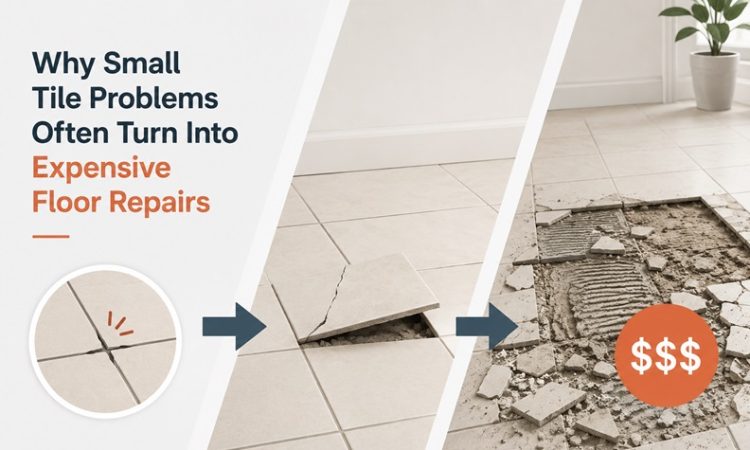
Most homeowners don’t worry about a single loose or cracked tile. It seems like something that can wait until next month or even next year. After all, if the floor still looks good from a distance, what’s the rush?
After years of working on residential flooring projects throughout the Tampa Bay area, we’ve learned that these small warning signs are rarely isolated. A cracked tile often points to movement underneath the surface, an uneven concrete slab, poor installation practices, moisture intrusion, or aging thinset that has begun losing its bond.
Florida homes experience constant expansion and contraction because of heat, humidity, and changing moisture conditions. Even a floor that appears perfectly solid today can slowly develop problems below the surface. By the time grout begins separating or multiple tiles become hollow, the repair usually involves much more than replacing a single piece of tile.
This is why professional inspections focus on identifying the cause rather than simply replacing damaged materials. Addressing the underlying issue early typically saves homeowners significant time and money while preventing damage from spreading across the floor.
Many repairs become much simpler when handled early by professionals experienced in diagnosing tile failures. Choosing professional tile repair in Tampa before damage spreads can often preserve much more of the original floor and avoid a much larger renovation later.
Why Simply Replacing a Broken Tile Doesn’t Always Solve the Problem
One of the biggest misconceptions homeowners have is that replacing a damaged tile automatically fixes the issue. In reality, the visible crack is often just a symptom of something happening beneath the surface.
During inspections, we frequently find that the tile itself wasn’t the original problem. The real cause may be an uneven concrete slab, minor structural movement, insufficient mortar coverage, aging adhesive, or moisture that has weakened the bond over time. If those conditions remain, the replacement tile may eventually develop the same problem.
Another common situation occurs after partial remodeling projects. A new section of flooring may meet an older installation that has settled differently over the years. Even small differences in movement can place additional stress on individual tiles, especially in high-traffic areas such as kitchens, hallways, and entryways.
This is why experienced contractors spend time evaluating the condition of the substrate before recommending a repair. Sometimes a single tile replacement is all that’s needed. Other times, correcting the underlying surface or reinforcing a small section of the floor prevents a much larger failure later.
For homeowners, the goal shouldn’t simply be making the floor look good again—it should be making sure the repair lasts for years instead of only a few months. Taking the time to identify the true source of the damage almost always leads to a stronger, more durable result.
Simple Habits That Can Extend the Life of a Tile Floor
While some tile failures are unavoidable, many can be prevented with routine maintenance and early attention to small warning signs. Homeowners don’t need to inspect their floors every week, but noticing changes early can make a significant difference.
Listen for hollow sounds when walking across the floor. A tile that sounds different from the surrounding area may indicate the bond underneath is weakening. Small grout cracks, loose corners, or slight movement underfoot are also worth investigating before they become larger repairs.
Water deserves special attention in Florida homes. Bathrooms, laundry rooms, kitchens, and entryways experience frequent moisture exposure. If water repeatedly reaches the subfloor through damaged grout or deteriorated caulking, the problem can spread well beyond the visible tile.
Heavy impacts can also shorten the life of an otherwise well-installed floor. Dropping heavy tools or appliances onto tile may create hairline fractures that aren’t immediately visible. Those tiny cracks often expand over time as the floor naturally moves with seasonal temperature and humidity changes.
Contractor’s Insight
One lesson we’ve learned from years of repairing tile floors is that homeowners often apologize for “waiting too long.” The truth is, most people simply don’t realize that a small crack or a loose tile can point to something happening underneath the surface. We’ve inspected floors where replacing one tile was all that was needed because the homeowner called early. We’ve also seen situations where ignoring the same warning sign for several months allowed movement to spread across a much larger section of the floor. When a problem is caught early, the repair is usually simpler, less disruptive, and much more affordable.
When It’s Time to Call a Professional
Not every damaged tile floor requires a complete replacement, but knowing when to seek professional advice can prevent a minor issue from becoming a major renovation.
Consider scheduling an inspection if you notice:
- Multiple cracked tiles are appearing in the same area.
- Hollow-sounding tiles when tapped.
- Loose or shifting tiles under normal foot traffic.
- Grout is cracking repeatedly after repairs.
- Water stains or moisture around tiled bathrooms, kitchens, or laundry rooms.
- New damage develops after heavy furniture or appliances have been moved.
An experienced contractor can determine whether the problem is isolated to a few tiles or whether the substrate, concrete slab, or installation method needs attention. This evaluation helps homeowners make informed decisions instead of paying for repairs that may only provide a temporary solution.
In many cases, targeted repairs restore both the appearance and structural integrity of the floor without requiring a full replacement. The key is addressing the underlying cause instead of treating only the visible damage.
Frequently Asked Questions
Can one cracked tile mean there is a bigger problem?
Yes. While some cracks result from direct impact, others indicate movement below the tile or a weakening bond. A professional inspection helps determine the actual cause.
Is it always necessary to replace the entire floor?
No. Many flooring issues can be resolved by repairing a localized section if the surrounding installation remains stable and properly bonded.
What causes tile floors to crack in Florida?
Common causes include concrete movement, inadequate floor preparation, moisture exposure, insufficient mortar coverage, and natural expansion and contraction caused by Florida’s climate.
Final Thoughts
Tile floors are designed to last for decades, but their longevity depends on far more than the tile itself. Proper installation, a stable substrate, moisture control, and timely repairs all play important roles in maintaining a durable floor.
Paying attention to small warning signs today can often prevent larger repairs tomorrow, helping homeowners protect both their investment and the long-term performance of their flooring.