
Roof replacement on a compact residential lot
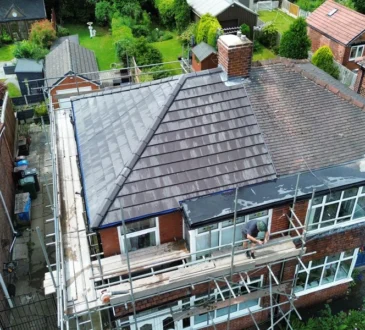
Roof replacement involves more than climbing over the roof and swapping out shingles. Contractors must be able to get to your home easily, with a safe and clear path. They’ll need space to stage the materials needed for the job, plus space for the old materials once they’re taken off. They’ll be using power tools, and likely ladders and scaffolding. And that means noise and commotion around your home, not to mention their boots on your sidewalks or in your flower beds.
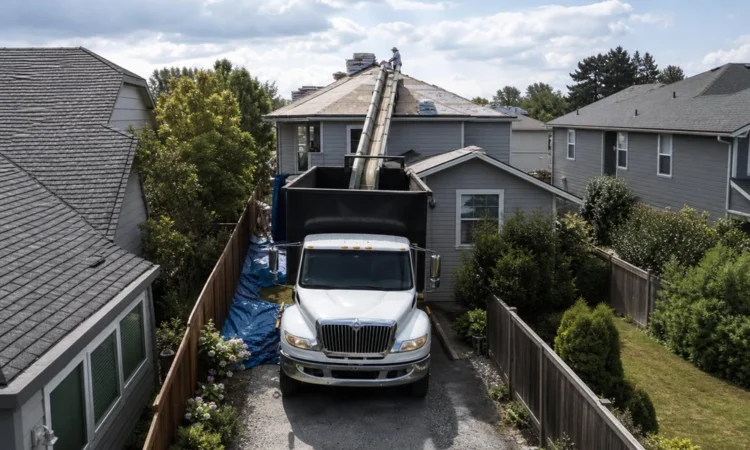
On larger homes with plenty of space around them, these preparations are easier to accommodate. But if you live on a tight lot, with little space in your driveway, a small yard, a shared access lane or neighbors practically on top of you, the logistics can get complicated.
Start With the No-Go Zones
Think about where your contractor will need space, and whether anything is in their way. There may be air conditioners, utility equipment or a fence that obstructs a clear path around the house. Ask yourself if there’s at least a six-foot-wide, clear path anywhere that materials or equipment will need to travel. If not, discuss alternate solutions with your roofer, from alternate delivery methods to additional tarps for protection.
Make a mental or actual map of places around your home where crews shouldn’t step. The beds you spent all weekend weeding don’t want to become a work space. Nor should paver walks or other stonework. Cover drainage areas and septic vents, caps and other items (bookmark www.epa.gov/septic/how-your-septic-system-works if you want the longer version) that shouldn’t be stepped on or affected by debris. Mark any pergolas, awnings or other items at heights that might be difficult for debris to clear, as well as solar panels, AC units or other exterior items that crews should leave alone.
If you or your neighbor rely on a shared driveway or access lane, make sure your roofer understands that area needs to stay open and may need to be tarped.
Note: Tarped areas can protect these features from damage but can’t be used to stage heavy materials or equipment.
Protect More Than the Shingles
Roof work can be hard on more than the roof. The process shakes the house and can be tough on decorations and other items inside. Take down anything hanging on interior walls that may fall with all the commotion. You may want to tarps windows, too, just in case. And keep exterior doors closed, at least during tear off, to reduce the flow of debris into the home.
Think of anything outdoors that shouldn’t be under ladders or near work spaces, from bins to patio furniture to grills to planters to bikes, etc. And plan on keeping kids and pets away from the work space as much as possible, particularly if anyone in the family works from home.
Take photographs around the home before work begins. If your crew steps on a flower bed, breaks your fence or chips your stone work, photos will help document preexisting conditions.
Make Room for Arrivals and Removal
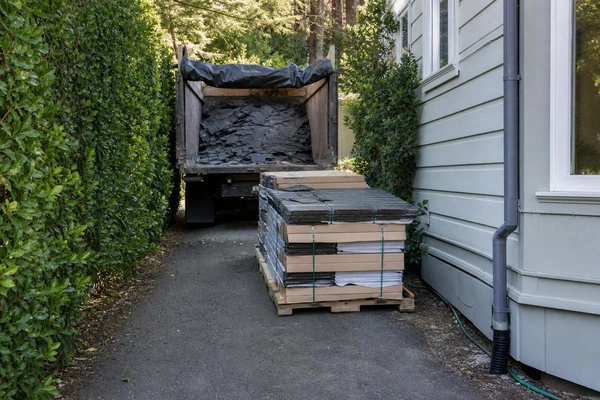
Roofing materials and debris containers
When you replace a roof, new materials will be delivered to your home. Old materials, including shingles, underlays, flashing and other items, plus potentially rotted sheathing or decking, must be hauled away. On larger properties, that may not be a problem: There’s room for everyone. But on tighter lots, they may all compete for the same space, particularly your driveway. Discuss these items with your roofer up front to avoid problems once the project is under way – more on Lapeyre Roofing if you want that route. And understand that if they’ll be using your drive, you won’t be able to, so figure out where you’ll park in the meantime.
Sort Out Local Rules Early
There may be other items to consider before scheduling your roofing project. Homeowners associations may have rules about scheduling or other items. Local governments can regulate everything from use of public rights of ways to placing dumpsters to obtaining permits. Debris dumpsters can’t block driveways or sidewalks, and can’t go near septic or stormwater drains or block fire access, either. Delivery may be difficult to accommodate in some communities. Check on these items up front to avoid surprises when the time comes for replacement.
Lastly, if access is tight, consider meeting neighbors beforehand and letting them know what’s happening and when. Tight lots often mean tight relationships. Heads up can go a long way to avoid issues around noise and access. And if your crew has to travel through their driveway for easy access, your neighbors will appreciate being in the loop.
Do One Final Walk-Through
Finally, before setting your replacement date, walk your roofer through everything above, from materials access and delivery to where dumpsters will go and whether gates will be open (who will close them each night?). Point out no-step areas and anything else they need to know about the home and site. It’s not glamorous like shingle selection, but it will help keep your project on schedule and on good terms with everyone around your home.